Small Manufacturers Unlock Big Productivity Gains with Collaborative Robots
🦞 OpenClaw Empowering Marketing AutomationSay goodbye to late-night publishing, manual replies, and inefficient scheduling. Let AI assistants boost your operational efficiency by 3x or more.Learn More →
For decades, industrial automation was the exclusive domain of large-scale manufacturers with seven-figure budgets and dedicated engineering teams. Traditional industrial robots demanded specialized programming, safety cages, and extensive facility modifications—barriers that effectively priced small and medium-sized enterprises out of the automation conversation. The collaborative robot revolution has fundamentally changed this equation, and small manufacturers are now among the biggest beneficiaries.
Cobots, or collaborative robots, are purpose-built to work alongside human operators safely and intuitively. Unlike their caged industrial counterparts, cobots feature force-sensing technology, simplified programming interfaces, and compact footprints that integrate into existing production environments without major infrastructure overhauls. For small manufacturers operating on tight margins and limited floor space, these characteristics are not just convenient—they are transformative.
Why Cobots Resonate with Small Manufacturers
Accessibility Without the Traditional Barriers
The most significant shift cobots have introduced is economic accessibility. While a traditional industrial robot installation might cost $100,000 to $500,000 before factoring in integration, safety infrastructure, and ongoing maintenance, a typical cobot deployment ranges from $25,000 to $60,000. More importantly, the total cost of ownership extends far beyond the purchase price. Cobots eliminate the need for expensive safety fencing in many applications, reduce integration complexity, and can be redeployed across different tasks without external engineering support.
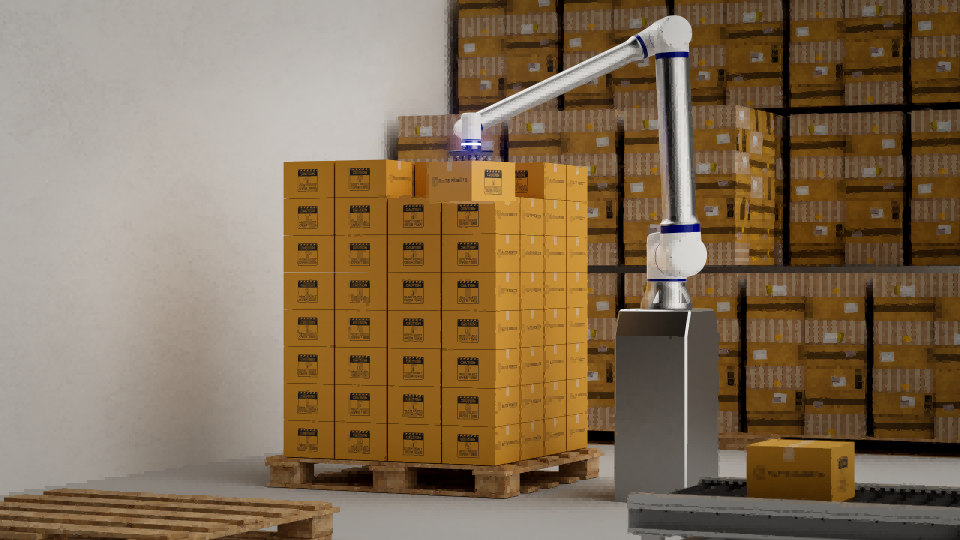
Installation timelines reinforce this accessibility advantage. Where traditional automation projects require months of planning and implementation, most cobot deployments are operational within days or weeks. Many small manufacturers report their first cobot running production within a single week of delivery.
Programming That Empowers, Not Intimidates
One of the most persistent misconceptions about cobots is that they require specialized robotics knowledge to operate. In reality, most modern cobots are designed for programming by the very workers who will collaborate with them. Intuitive interfaces—including hand-guiding (physically moving the robot arm to demonstrate a task), drag-and-drop programming environments, and pre-built application templates—enable operators with no coding experience to configure and modify cobot tasks independently.
This democratization of programming has profound implications for small manufacturers. It means production adjustments can happen in real time without waiting for external integrators, iterative process improvements become routine rather than exceptional, and the workforce develops a sense of ownership over the technology rather than viewing it as an imposed disruption.
Real Productivity Gains Across Key Applications
Assembly and Material Handling
Assembly operations represent one of the highest-impact applications for cobots in small manufacturing. Tasks that are repetitive, precision-dependent, and physically fatiguing for human workers—such as inserting components, applying adhesives, or torque-tightening fasteners—are ideally suited to cobot automation. Manufacturers consistently report 25% to 40% increases in assembly throughput after cobot deployment, driven by the robot's ability to maintain consistent pace and precision without fatigue breaks.
Material handling applications deliver similarly compelling results. Cobots equipped with machine vision systems can pick, place, and sort parts at speeds that match or exceed human operators while maintaining zero error rates over extended shifts. For small manufacturers running batch production where each part transition introduces variability, this consistency translates directly into reduced scrap and rework costs.
Machine Tending
CNC machine tending is a classic pain point for small manufacturers. Skilled machinists are expensive and increasingly scarce, yet the physical act of loading and unloading parts from CNC machines is low-value work that pulls operators away from programming, quality inspection, and process optimization. Cobots configured for machine tending can operate continuously across multiple machines simultaneously, enabling lights-out or near-lights-out production during second and third shifts.
One small contract manufacturer in the automotive components sector deployed a single cobot to tend three CNC machines, eliminating the need for a dedicated second-shift operator. The result was a 35% increase in machine utilization and a payback period of approximately 8 months.
Quality Inspection
Vision-guided cobots are increasingly performing quality inspection tasks that previously required trained inspectors or expensive dedicated inspection systems. By integrating cameras and sensors directly onto the cobot arm, manufacturers can automate dimensional checks, surface defect detection, and assembly verification at the point of production. This shift from end-of-line batch inspection to in-line continuous inspection catches defects earlier, reduces waste, and provides real-time process feedback that enables rapid corrective action.
The Workforce Impact: Augmentation, Not Replacement
Perhaps the most important narrative about cobots in small manufacturing is their impact on the workforce. Unlike the job-displacement fears associated with traditional automation, cobots consistently create opportunities for workforce development rather than elimination.
By handling the physically demanding, repetitive, and potentially hazardous tasks, cobots free human workers to focus on activities that require judgment, creativity, and problem-solving—process improvement, quality management, customer interaction, and equipment optimization. Far from reducing headcount, most small manufacturers that adopt cobots use the productivity gains to expand output and take on new business, often creating additional skilled positions.
A 2025 industry survey revealed that 73% of small manufacturers who deployed cobots in the previous two years reported net job creation, not reduction. The new positions tended to be higher-skilled and higher-paying roles in robot supervision, programming, and process engineering.
Overcoming Common Adoption Hesitations
"We Don't Have the Technical Expertise"
This is the most frequently cited concern among small manufacturers considering cobots. The reality is that modern cobots are specifically designed to be deployed without specialized robotics knowledge. Most manufacturers offer comprehensive training programs, extensive application libraries, and responsive technical support. The learning curve is measured in days, not weeks.
"Our Production Runs Are Too Variable"
Ironically, variability is precisely where cobots excel compared to traditional automation. The ease of reprogramming and redeploying a cobot between tasks makes them ideal for high-mix, low-volume production environments—a production profile that describes the majority of small manufacturers. While traditional automation demands stable, high-volume runs to justify the investment, cobots deliver value even in batch sizes as small as dozens of units.
"The ROI Isn't Clear for Our Scale"
The mathematics of cobot ROI for small manufacturers are surprisingly favorable. With typical payback periods ranging from 6 to 18 months and cobot lifespans of 10 to 15 years, the long-term return is substantial even for operations running a single shift. Government incentives—including accelerated depreciation schedules, manufacturing modernization grants, and workforce development programs—further improve the financial case in many regions.
The Road Ahead: AI-Enhanced Cobots
The next generation of collaborative robots is already arriving, equipped with artificial intelligence capabilities that will further expand their value for small manufacturers. AI-powered vision systems enable cobots to handle greater variability in part presentation and orientation without costly fixturing. Machine learning algorithms allow cobots to optimize their own trajectories over time, progressively improving cycle times and reducing energy consumption. Predictive maintenance capabilities minimize unplanned downtime by alerting operators to potential issues before they cause production interruptions.
These advancements do not require additional expertise from the small manufacturer—they are embedded in the cobot's software and delivered through automatic updates. The AI-enhanced cobot of 2025 is as easy to deploy as the cobot of 2020, but dramatically more capable.
Conclusion
Collaborative robots have fundamentally democratized access to industrial automation. For small manufacturers, they represent not merely a technology upgrade but a strategic enabler—the ability to compete on quality, lead time, and cost against operations many times their size. The productivity gains are real, quantifiable, and achievable with modest investment and minimal disruption.
ELibot's collaborative robot solutions are engineered specifically with small manufacturers in mind, offering intuitive programming, versatile application capabilities, and robust support that make automation accessible regardless of technical background. By lowering the barriers to entry and delivering rapid measurable returns, ELibot helps small manufacturers unlock the productivity gains that collaborative robots promise—and turn those gains into sustainable competitive advantage.
版权声明:本文内容由网络用户投稿,版权归原作者所有,本站不拥有其著作权,亦不承担相应法律责任。如果您发现本站中有涉嫌抄袭或描述失实的内容,请联系我们jiasou666@gmail.com 处理,核实后本网站将在24小时内删除侵权内容。
相关文章
